


If you have a garden, you can expect to encounter a few pests in the summer. Though some are more aggressive than others, there’s always a way to manage them. The first step is knowing what to look for; here are a few common pests to watch for in your landscape!
Crape myrtle bark scales are invasive insects that appear as white or gray scales on the crape myrtle bark, accompanied by a sooty black mold from the honeydew (a sugar-rich liquid) the pests excrete. Look for them congregating on crooks in branches, pruning sites, and under peeling bark!

Photo Credit: Virginia Cooperative Extension Office
These pests may not kill a crape myrtle, but they’ll weaken the tree, causing a reduction in flowers, growth, leaves, and the overall aesthetics that we so dearly prize. CMBS can also spread to persimmons, boxwood, American beautyberry, privets, cleyera, and raspberries, especially if they’re close to a crape myrtle.
Lady bugs and other predatory insects effectively control CMBS, but these predators can take a while to build up. You can strengthen the tree by ensuring it’s as healthy as possible, with proper pruning, watering, and fertilizing according to the soil’s needs.
For minor infestations, you can remove the scales by scrubbing them with a diluted dish soap solution. Use a soft brush to remove the sooty mold and the scales. You can also use a pressure washer to help remove them from crooks of branches or other difficult-to-reach areas.
For major infestations, you may need to use chemical treatment. A soil drench can be applied around the tree so that the tree absorbs the chemicals, which then kill the bugs as they eat the bark. This treatment works most effectively in early spring when the tree starts growing and lasts for one year. Alternatively, you can spray them with insecticide or horticultural oil in late April or May, when the bugs first hatch, or again in late summer, when the pests undergo their second hatch of the year.

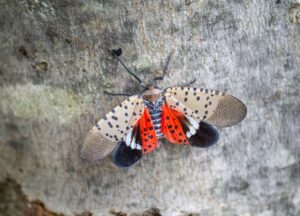
These are another landscape pest spreading through the country, infecting hardwoods, grapes, pine, willows, apples, and stone fruit. They especially prefer the tree-of-heaven as a host plant.
As adults, they’re approximately 1.75 inches long and have a pair of wings—one gray and one red—with black spots. Their eggs, which survive the winter and hatch in the spring, resemble a dried piece of mud that’s 1-1.5 inches long. You may find the eggs on trees, decks, tarps, campers, or anywhere in your landscape. After they hatch, they crawl as nymphs for part of their lifecycle before maturing into flies in the summer.
As nymphs and flies, they suck the sap from the leaves or bark of trees and secrete honeydew, which can rain down from the tree onto the landscape below.

1. Remove Eggs: the first step is to maintain vigilance, looking for any flies, nymphs, or patches of eggs around your landscape. If you find eggs, scrape them away, then kill them with alcohol or seal them in a plastic bag for disposal.
2. Tape Trees Against Nymphs: as nymphs, they are knocked off by rain and wind and climb trees again from the ground. You can stop their migration by securing a sticky band around the trunk, which traps the nymphs as they climb over it. Make sure to remove and replace the band every 1-2 weeks.
3. Treatment for Adults: you can treat the adults with insecticide when they emerge from June to August, as long you’re not planning to harvest any fruit or nuts from those trees. It’s not safe to use insecticides on food-bearing trees close to harvest time. Be sure to follow instructions and consult our experts if necessary.

Many different kinds of pests can affect your landscape during the summer. Aphids, scale, and mealy bugs are common sap-sucking insects that feed on plants and may not cause much damage unless they’re left to multiply into large numbers.
Leaf miners, spider mites, and leafhoppers are smaller pests that are barely visible but create visible damage to the leaves. Keep an eye out for damaged leaves and remove them as soon as possible to prevent the spread.
Having a healthy ecosystem in your yard is the first step in preventing pests from taking over. Take time to plant host flowers for beneficial insects and keep your soil healthy. For other tips on managing Virginia landscape pests, visit our garden centers in Alexandria and Lothian!