Having too much garden produce is not a bad problem, but when the final harvest comes, it’s tricky to know how to preserve it. Fortunately, our ancestors figured out many methods long before the fridge was invented. If pickling, canning, and dehydrating are not your thing, don’t worry—there are several ways to preserve your garden vegetable harvest by simply storing them in the right place!
The Root Cellar
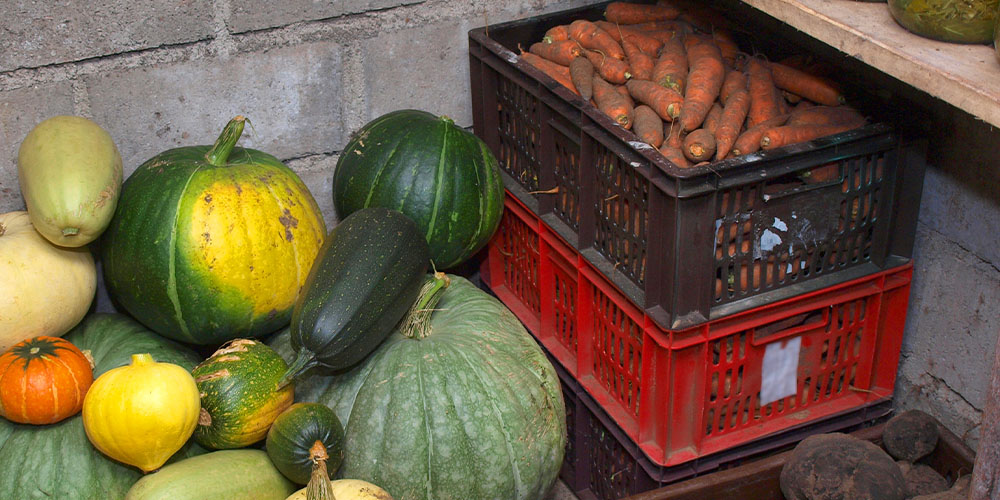
There’s nothing like the earthy smell of a root cellar to bring us back to the old days of food storage. This simple technology still works today, and you don’t need a specially built room to use it. Simply find a place in a cold part of your basement, garage, sunroom, or under the deck. All that’s required is for temperatures to remain cool, ideally around 39 degrees, but not below freezing.
Root vegetables, squash, pumpkins, and onions can all be stored there. If you have space, keep the vegetables separate, so they’re not touching each other. That gives them room to breathe and reduces spoilage. Also, keep in mind to only preserve mature, unblemished vegetables. Eat all your nicked and damaged harvest first, as they will be the first to spoil.
Store Root Vegetables in Sand
Another easy way to preserve your harvest is by putting it in sand. Beets, carrots, potatoes, parsnips, radishes, rutabagas, onions, and turnips can all be stored this way. The first step is to clip off the greens and brush off excess soil, but don’t wash them. Then leave them in the garden to dry for an afternoon, so the skin hardens.
Afterward, fill your crates with a few inches of slightly moist, clean sand. Lay your vegetables on top, ensuring none of them are touching. Then cover them with another layer of sand, and repeat the process until the container is full. Store them in a root cellar or a cool place that doesn’t freeze. Check them periodically to make sure they’re not spoiling. If all goes well, they should last for six months.
How to Store Potatoes
If you’re not using the sand method or a root cellar, you can still store your harvest of potatoes as they are. Place them in a breathable, mesh, or burlap sack, and find a dark place. They’ll keep for at least two weeks at room temperature and longer in a cool basement. Check on them periodically and eat the softest ones first.
Storing Garden Onions
You can store onions outside of a fridge in a mesh bag or open basket, but not a plastic bag. If kept in a dark place at 45-55 degrees, they’ll last for 2-3 months. At room temperature, they’ll last 2-4 weeks. Note: keep your garden onions away from potatoes as the moisture from potatoes can spoil onions.
How to Store Leafy Greens
In a refrigerator, leafy greens stay fresh for at least one week and sometimes longer. The key is to store your leafy harvest in the crisper in a sealed bag with a paper towel inside to absorb moisture. Also, keep them separate from fruit, which can speed up the spoilage of vegetables by releasing ethylene.
How to Preserve Green Tomatoes
A harvest of green tomatoes is a special treasure, as they’ll stay green and ripen slowly with the proper care. Simply line a shallow cardboard box with newspaper, and place your garden tomatoes in it, so they are not touching. Add another layer of newspaper and put more tomatoes on top. Cover them with another layer of newspaper and place the box in a cool, dark room. Check the tomatoes periodically and eat the ones that ripen the fastest. They’ll last for weeks and even months.
How to Freeze Your Harvest
You can store hardy, leafy greens such as kale and collards in the freezer as they are. Just take them out and thaw them when you’re ready to eat them. Other garden vegetables require blanching before going in the freezer and will last 6-8 months. The soup cook-a-thon and spaghetti sauce extravaganza are other tried-and-true ways to prepare your harvest for freezing.
With these methods, you can preserve and enjoy your precious garden veggies for many weeks and months. One final tip is to remember toeat them while they’re still fresh and nutritious!
For any more advice on preserving your garden harvest, feel free to visit our garden centers in Alexandria, Lothian, and Belle Haven!
At Greenstreet Gardens, we take pride in the fact that our number one goal is to make our customers successful.
Equipped with a diverse wealth of information and a knowledgeable staff, we are confident that we are able to provide all of the right tools and plant material necessary to help make your gardening ideas become reality.