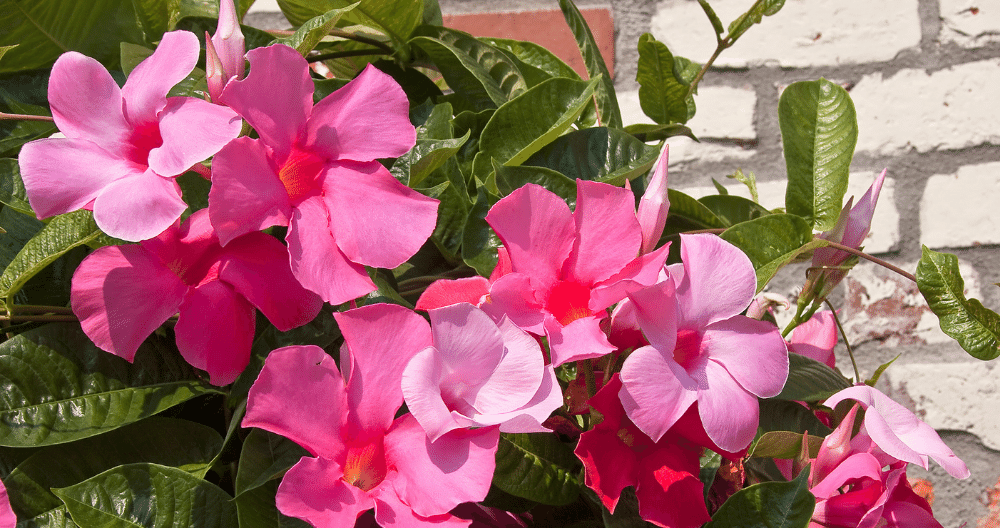
Mandevillas are a tropical vining plant that produces gorgeous flowers which slightly resemble hibiscus flowers. The best thing about mandevilla plants is that they’re easy to grow in pots or hanging baskets and require minimal care. Read on to learn everything you need to know about growing a marvelous mandevilla!
How to Grow Mandevilla Vine
This tropical shrub is popular for its showy flowers, which grow along vigorous twining vines. If growing mandevilla vines in pots, you’ll want to give them support, such as a trellis, for the best growing results. Otherwise, the vines will grow in a splayed-out fashion as they reach in vain for something to grab on to!
Soil Requirements for Mandevilla Vine
Mandevilla vines like to grow in soil that is rich in nutrients but also well-draining. They do not like wet feet, so a perfect growing medium would be two parts potting soil, or peat moss, to one part sand. Adding some compost to your pots is always a good idea as it will boost the soil with much-needed nutrients.
Light Requirements for Mandevilla Vine
Ideal light conditions for mandevilla vines would be in a location where they can get a few hours of morning sun a day, with partial shade in the afternoon. While they do love high humidity, they are prone to sunburn if exposed to direct midday sunlight.
Water Requirements for Mandevilla Vine
When it comes to watering your mandevilla vines, the general care rule is pretty straightforward. As we mentioned, mandevilla doesn’t like wet feet, so the number one cause of unhealthy mandevilla is often overwatering.
During the growing season, you will most likely be watering your mandevilla vine every week, but make sure you allow the soil to dry in between watering. Always check the soil before watering; if it’s dry to the touch, go ahead and give it a good soak, but if it’s still slightly damp, hold off for another day or two. It’s crucial to grow your mandevilla vine in pots that have drainage holes to prevent root rot. When choosing pots for your mandevilla, be sure only to size up an inch or two larger than the nursery pots. Otherwise, the plant will focus its energy on growing its roots instead of the prized vines and flowers.
Mandevilla Vine Maintenance
For the most part, mandevilla are pretty low maintenance, needing only basic care. However, to keep your mandevilla vine looking its very best, it’s a good idea to prune it regularly. Pinch off about a quarter or a half-inch of each stem to promote a full and bushy appearance.
While pruning your mandevilla vines, be sure to wear gloves as the sap will irritate your skin. It’s also poisonous to pets, so make sure to have your mandevilla plant in a safe spot away from the reach of curious paws and small hands. Also, be on the lookout for clusters of bud balls while you’re pruning. These bud balls are how the plant produces flowers, so if you prune them away, you’ll be depriving yourself of those gorgeous flower blossoms!
Mandevilla Flowers
The showy trumpet-shaped flowers of mandevilla vines are a huge part of what makes these tropical plants so beautiful. You can take your pick from flowers that bloom in vibrant shades of yellow, cream, red, and pink.
As if their appearance weren’t pleasant enough, the blooms also give off a mild, sweet scent! Another name for mandevilla vines is Chilean jasmine, and their scent certainly does remind us of the delicious aroma of jasmine. Mandevilla flowers will bloom from spring to fall, and with proper care, the vines can grow as long as 15 feet in only one growing season!
Fertilizer Requirements for Mandevilla Vines
Mandevilla will need to be fertilized regularly throughout the summer. We recommend fertilizing your mandevilla vine with a water-soluble, high-phosphorus fertilizer, applying this mixture every two weeks during the growing season.
Overwintering Mandevilla Vines
Mandevilla plants can actually be kept all year round as houseplants and don’t require any additional care. If you want to overwinter a mandevilla, there is no need to continue fertilizing it during its dormant period. Flower loss will occur, so don’t be alarmed when your mandevilla starts dropping flowers after you bring it indoors.
Before you bring your mandevilla vine inside, you should inspect it for bugs. Mandevilla are susceptible to mealybugs and spider mites, which can spread to any other houseplants. Next, cut back your mandevilla so that the vines are only about a foot long; this will allow it to rest during dormancy and encourage new, vigorous growth in the spring.
You’ll be cutting back on watering, too. Because mandevilla can be a bit cumbersome due to their size, you may find watering in the shower to be the best method, and your mandevilla vine will love the boost of humidity from the showerhead.
And there you have it! Mandevilla vine care is as simple as it gets. Feel free to stop in at our Lothian, Alexandria, or Belle Haven locations and check out our selection of mandevilla plants for sale, as well as our collection of gorgeous pots. We’re always happy to help with any plant care needs and inquiries.
At Greenstreet Gardens, we take pride in the fact that our number one goal is to make our customers successful.
Equipped with a diverse wealth of information and a knowledgeable staff, we are confident that we are able to provide all of the right tools and plant material necessary to help make your gardening ideas become reality.