


Powdery mildew is one of every gardener’s age-old adversaries. We try to keep it from clinging to our roses, Crepe Myrtles, and Squash, but humid, hot weather creates conditions where it is unavoidable. This year, powdery mildew has arrived early, seems to be everywhere, and looks worse than ever. Luckily, it’s not the first time we’ve dealt with this fungus, and it won’t be the last. Here are the best ways to prevent, manage, and treat this pest while keeping our gardens alive and green.
Powdery Mildew starts with small white circles on your leaves and soon looks almost like someone has dusted them in flour. If left untreated, it can damage the leaves, weaken your plants, and ruin our blossoms. Like other fungi, it thrives when your plants are unusually wet and spreads through spores blown in the wind.
Black Spot is another frequent visitor that especially likes roses. Plants can often tolerate these dark polka dots, but it’s best not to let this fungus get out of control.
Rust first shows up on the underside of leaves, then spreads to the surface with rusty orange blotches. These bright scars may make you squeamish, but don’t worry—this fungus is no more harmful than powdery mildew and with proper knowledge and care, can be prevented.
Other leaf disease including Downy Mildew, Entomosporum, Circospora, and Septoria Leaf Spot, and to a degree also Anthracnose and a whole host of other less common diseases can also appear in your garden.

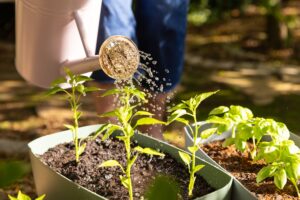
To prevent a fungal intrusion, remember to water in a circle around the base of your plants, not the leaves; prune away dense foliage to promote airflow; and irrigate in the morning, not the evening, so your plants aren’t sitting wet overnight—an invitation for any lurking infection. You can also mulch your garden to prevent fungal spores in the soil from splashing up onto your plant’s leaves.
If you spot powdery mildew or another fungus, if you clip away the infected areas and put them in the trash, not the compost, so you don’t spread the spores back into your garden. Always disinfect your clippers afterward. Pruning out infected areas may not be an option for young or heavily infected plants.
If you’re planting in a moist or shady area, you may also choose to look for disease-resistant plant varieties.

Sometimes the weather has different plans, despite our best intentions. In those cases, a fungicide can come in handy. The brand Bionide has an excellent range of products that treat most plants in your garden. Their copper fungicide spray eliminates mildews, black spot, and a huge range of other fungal infections on garden plants, shrubs and shade trees. They also have two sulfur-based sprays that are actually the same product—one labeled for tomatoes and vegetables, and another for orchard trees. Sulfur and Copper based fungicides are safe to use on anything from trees to veggies and herbs. Bonide also makes Fung-onil,another broad-spectrum disease control spray. Bio-Advanced 3-in-1 and Bionide’s Infuse also treat a wide variety of diseases on any of your shrubs, flowers, and even on your lawn. These two products are absorbed by the plants to protect them for up to a month. They are simple to use and equally highly effective when applied at the first sighting of a disease. Just be sure to follow the directions carefully.

Despite the annoying members of this group of organisms, fungi have an important role in the ecosystem and even in urban soils.. They belong to a whole kingdom of organisms that return plant and animal matter back into living soil where it can be used again by other plants. They keep our ecosystems, and by extension us, alive. Without them, we wouldn’t be able to garden at all. They usually work invisibly in our compost or underground. While some fungi are a real nuisance, most of them are harmless and even worthy of our praise. So as you take steps to treat or prevent fungal disease, don’t blame all fungi, because others are working hard to keep our gardens’ life cycles going. In the end, it’s all a part of growing a healthy garden, and that’s our passion here at Greenstreet Gardens.