The benefits of composting are undeniable. It’s better for the environment, easy on your bank account, and you’ll be shocked to see how much less garbage you have at the end of the week! Plus, it’s pretty simple once you get the hang of it. Here are some composting tips for beginners that will help you save a ton of money and reduce your carbon footprint in the process.
Beginner Tip # 1: What Kind of Bin to Use
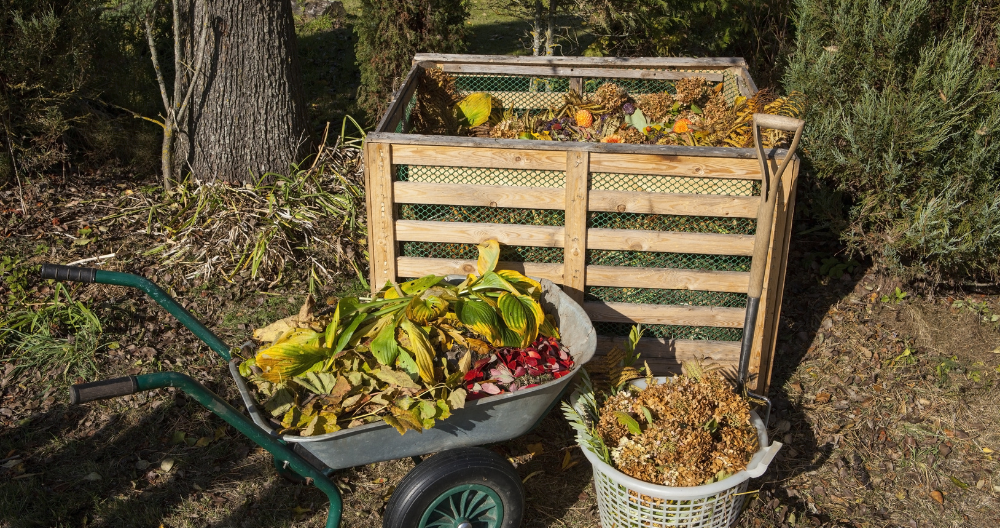
As a beginner, you might be wondering where to keep everything. While you can purchase a compost bin ready-made from your local hardware store or garden center, they’re also easy to build. You can make your own bin from materials like wood pallets and chicken wire, an existing garbage bin or plastic tote, or even by using the ‘dig and drop’ method where you simply dig a hole, drop in the organic matter, and then cover it back up again.
The most common composting bins include stationary ones that sit on the ground and “tumbling” composters, which are elevated and can be rotated to increase airflow. With that said, as long as you can access the compost in a stationary bin, it’s easy to turn it manually with a shovel or pitchfork. Stationary composters also tend to fit a bit more organic material than elevated ones.
Beginner Tip # 2: Create a ‘What Goes In, What Stays Out’ Cheat Sheet
This a great tip for beginners who are just starting to learn the art of composting, as all organic material is not created equal. Fruit and vegetable scraps of any kind (raw or cooked), coffee grounds, napkins, paper towels, crushed eggshells, shredded newspaper (the black and white ones), and even dryer and vacuum lint can all be composted.
But meat, bones, dairy, fats, or eggs are all likely to attract pests. You should also avoid composting pet waste because it can carry some pretty icky pathogens that you don’t want to spread all over your garden, particularly if it is a veggie garden.
Beginner Tip #3 – How to Set Up Your Compost Bin
Now that you have your bin and know what goes in and what stays out, it’s time to start using it! Ideally, you want easy access from your kitchen as that is where the majority of the contents will be coming from. Keep the area around your bin relatively neat and tidy; otherwise, you may attract some pests or rodents. Try to stay away from shallow-rooted trees as they may end up growing into your compost pile.
Beginner Tip #4 – Ensure You Have a Balance of Green to Brown Matter
Start with a layer of “brown” matter like dried grass clippings, cardboard, twigs, leaves, shredded newspaper, wood shavings, or sawdust. When you rake in the fall, you can even keep a bag of leaves to continue to mix in over the winter. An ideal ratio of green to brown matter is four brown to one green. Brown matter helps to keep an appropriate moisture level. Ideally, you want your compost to be about as moist as a wrung-out kitchen sponge. If it’s too dry, it won’t actually compost, but if it’s too wet, it will get pretty stinky pretty fast. Green matter consists primarily of kitchen scraps and freshly picked weeds, freshly mown grass, and garden clippings.
Beginner Tip #5 – Remember to Turn Your Compost Periodically
If you get one of the rotating compost bins, this is as simple as turning a handle. But, if you have a stationary bin, you will need to do this manually. Turning your compost is important as it aerates everything and helps it break down into rich, beautiful soil much quicker. By turning it, you move bigger pieces into the interior of the pile where the temperature is much higher, in turn breaking them down quicker.
You should have some beautiful, dark, earthy soil in a few months by following these tips and tricks! By adding this to your garden soil, you will introduce nutrients, help your soil retain water, and overall help your plants grow bigger and stronger. If you need any more help or are on the hunt for your first compost bin, stop by Greenstreet Gardens to talk to an expert and see what we have in stock.
At Greenstreet Gardens, we take pride in the fact that our number one goal is to make our customers successful.
Equipped with a diverse wealth of information and a knowledgeable staff, we are confident that we are able to provide all of the right tools and plant material necessary to help make your gardening ideas become reality.