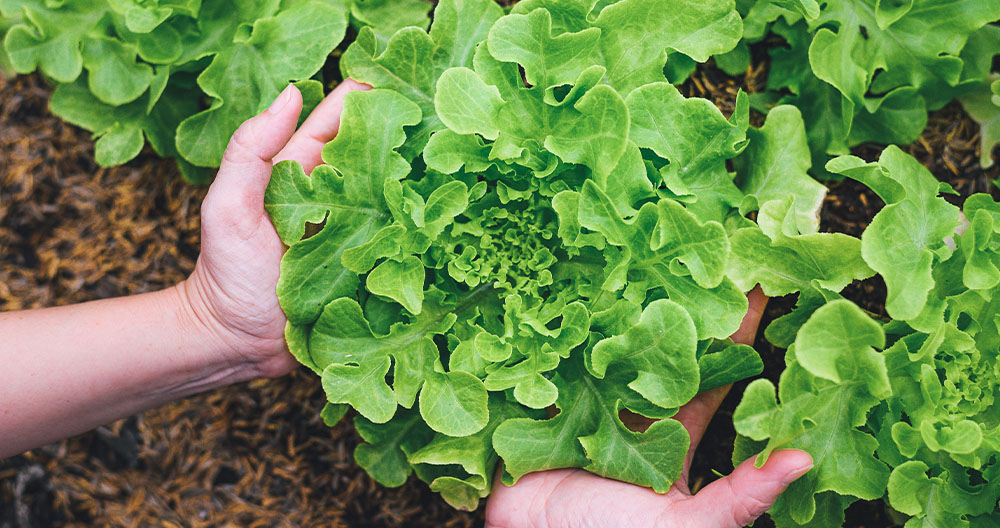
Like so many other garden vegetables, once you’ve tasted home-grown lettuce, it’s hard to go back to the grocery store variety. Fortunately, this popular vegetable is very easy to grow. Here’s a guide to get you growing crisp, rich-flavored lettuce this spring, summer, and even right through into the fall!
Where to Grow Lettuce
These leafy vegetables grow well in full sun or light shade. An ideal spot is where they’ll receive a little afternoon shade in the hottest part of the day. That will keep them from bolting too soon when temperatures get hot, but afternoon shade is not absolutely necessary.
Preparing the Soil
Lettuce thrives in well-draining, nutrient-rich garden soil—the same kind you would prepare for your other vegetables. A layer of aged manure or compost mixed into the soil beforehand will make them happy for the growing season.
How to Sow Directly in the Soil
Once we pass the last frost date, which is April 2 in Alexandria and about a week later in Lothian, you can sow lettuce directly into the soil. Their seeds are small, so they don’t need to be planted very deep, only about 1/4 inch. Since you’ll be thinning the lettuce plants later, you don’t need to worry about planting them too close. It’s ideal to plant them close together so you can thin and enjoy baby lettuce as they grow!
Harvesting and Thinning Lettuce
Once your lettuce plants start to look crowded, you can start thinning them and enjoying the first taste of your harvest. After the plants are about 6 inches tall, you can start harvesting a few of the outer leaves around the plants. In general, there are two ways to harvest lettuce:
Cut Back and Regrow: once a plant is full-sized, you can harvest the whole head of lettuce. This strategy works well with varieties like iceberg lettuce and romaine, which have a defined head. You can also cut off the plant when it’s small or medium-sized and leave the roots in the ground. It will regrow for a second harvest!
Harvest a Few Leaves at a Time: another approach is to harvest leaves slowly as the plant grows. Since the plant grows from the middle, it’s best to harvest the outer leaves, which are the oldest. The more you harvest at once, the more time it will take the plant to grow back. If you only pick a few leaves at a time, you can enjoy a daily salad or two, and your plants will keep growing.
When Lettuce Plants Bolt
Once the lettuce has reached a certain size or when temperatures get high, the plant will bolt. Bolting means it will start sending up a stem to flower. If you catch the stem early enough, you can simply cut it back and enjoy the leaves until it bolts again. If you let it bolt, the leaves will turn bitter. Ideally, you want to harvest the plant before that happens.
Replanting Lettuce for a Continuous Harvest
Once they bolt, you can leave the flower to attract pollinators or replant another lettuce crop. Thomas Jefferson recommended planting lettuce every Monday during the growing season, so you always have some ready to harvest. Even if you plant them every two weeks, you’ll enjoy fresh salads and BLTs right through into the fall.
How to Water Lettuce
Lettuce has shallow roots, which means that they need water fairly often—plan to water them twice a week or when the top inch of soil is dry. When you’re first starting, remember to water the seeds daily for 10-14 days until they germinate and have roots so they can absorb water.
Starting Lettuce Indoors
If you enjoy growing lettuce and want some to eat by the end of April next year, you can start your plants indoors eight weeks before the last frost date and then transplant them outside. Keep this in mind for next year if you want to take advantage of early-season salads!
At Greenstreet Gardens, we take pride in the fact that our number one goal is to make our customers successful.
Equipped with a diverse wealth of information and a knowledgeable staff, we are confident that we are able to provide all of the right tools and plant material necessary to help make your gardening ideas become reality.